The history of Oris
24 watches for sale · 6 dealers · $1,295 to $7,995 · typically $2,495
Explore Oris's rich history, technical innovations, iconic collections, and market position as a leader in accessible, high-quality mechanical watchmaking.
Oris, an independent Swiss watchmaker, has carved a distinctive niche in the horological landscape, celebrated for its unwavering commitment to mechanical movements and purposeful design. From its humble beginnings to its current standing, Oris consistently delivers robust, well-engineered timepieces that resonate with enthusiasts and collectors alike.
Foundational History
Oris was founded in 1904 by Paul Cattin and Georges Christian in the picturesque Swiss town of Hölstein. The company quickly expanded, becoming Hölstein's largest employer by 1911, a testament to its early success and rapid growth. A pivotal moment in Oris's history was the introduction of the restrictive Swiss 'Watch Statute' in 1934, which limited technological advancements for watch manufacturers. Despite this, Oris persevered, developing its own escapements and later, under the long tenure of General Manager Oscar Herzog (1928-1971), navigating the brand through significant periods of change. The brand's resilience was further tested during the Quartz Crisis of the 1970s and 80s, but Oris defiantly chose to remain dedicated exclusively to mechanical watchmaking, a decision that ultimately led to its independence through a management buyout in 1982. This commitment to traditional horology has been a defining characteristic ever since.
Horological Significance
Oris's technical prowess is underscored by its exclusive focus on mechanical movements, symbolised by its distinctive 'red rotor' in automatic calibres. A significant horological achievement is the Calibre 400 series, launched in 2020. This in-house automatic movement sets a new standard for accessible luxury, boasting an impressive five-day (120-hour) power reserve, achieved through a twin-barrel system. The Calibre 400 also features exceptional resistance to magnetism, incorporating over 30 non-ferrous components, including a silicon escape wheel and anchor, and is tested to withstand fields of 2,250 gauss, far exceeding ISO 764 standards. Furthermore, Oris demonstrates immense confidence in its reliability by offering a 10-year warranty and a 10-year recommended service interval for movements in this series. Notably, the Calibre 400 replaces traditional ball bearings in its winding system with a low-friction slide bearing, enhancing durability and efficiency.
Three Defining Collections/Models
Big Crown Pointer Date
First introduced in 1938, the Big Crown Pointer Date is an iconic pilot's watch, instantly recognisable by its oversized crown, designed for easy manipulation while wearing gloves. Its defining feature is the 'pointer date' complication, where a central hand indicates the date on an outer track of the dial, offering a distinctive and legible alternative to a date window. This collection is highly valued by collectors for its rich aviation heritage and enduring vintage aesthetic.
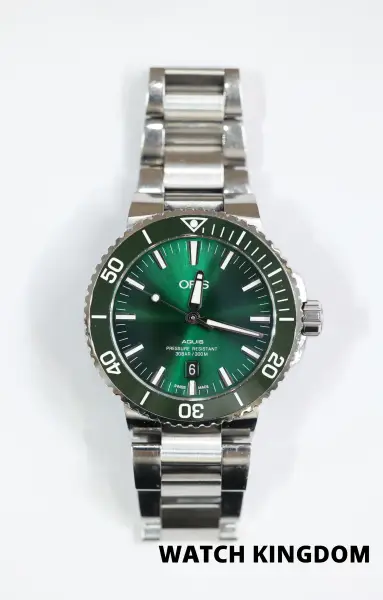
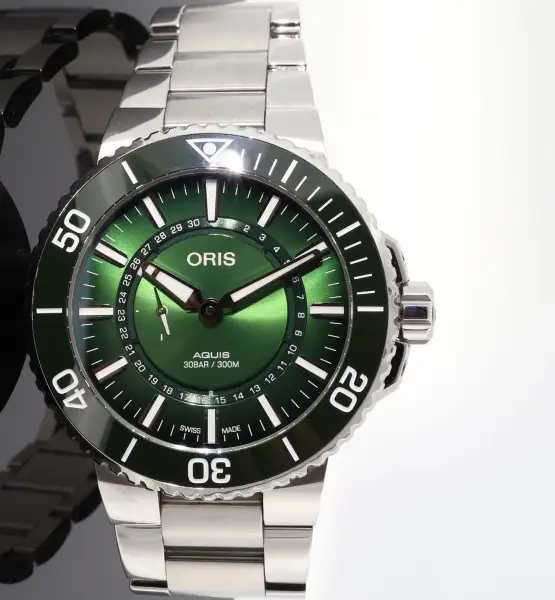
Aquis Date
The Aquis Date represents Oris's modern, high-performance dive watch offering. Characterised by its robust construction, impressive water resistance (often 300m, with some ProDiver models reaching 1000m), and contemporary design, the Aquis is built for serious underwater exploration. Its sleek appearance and integrated strap options make it versatile for both professional and everyday wear. The Aquis collection, particularly models featuring the Calibre 400, is celebrated for its blend of functionality, style, and exceptional value.
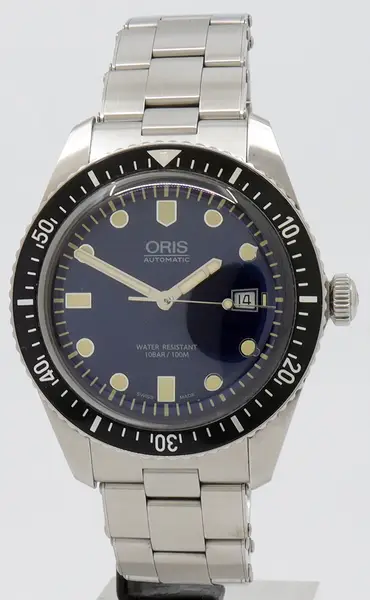
Divers Sixty-Five
Launched in 2015 as a re-issue of a 1965 diver's watch, the Divers Sixty-Five perfectly captures vintage charm with modern reliability. It features a retro-inspired design, often with a unidirectional rotating bezel and luminous elements, appealing to enthusiasts who appreciate a blend of historical aesthetics and contemporary performance. The collection's success lies in its ability to evoke nostalgia while meeting modern standards for durability and water resistance.
Current Market Positioning
Oris firmly positions itself within the entry-level to accessible luxury segment of the Swiss watch market. The brand is renowned for offering exceptional quality and craftsmanship without the inflated costs often associated with ultra-luxury brands. In Australia, typical prices for popular Oris models generally range from approximately AUD $2,000 to $8,000, with watches featuring the advanced Calibre 400 series often sitting at the higher end of this spectrum. Oris competes effectively with peers such as Longines, TAG Heuer, and Tudor, distinguishing itself through its independence, unwavering dedication to mechanical movements, and a strong value proposition that prioritises substance over marketing prestige.
Sources and references 30
- oris.ch
- fratellowatches.com
- bobswatches.com
- james-porter.co.uk
- brinkersjewelers.com
- gnomonwatches.com
- mohammadandsons.com
- en.wikipedia.org
- firstclasswatches.co.uk
- chawijewelers.com
- watchgecko.com
- bobswatches.com
- vincentwatch.com.sg
- teddybaldassarre.com
- hodinkee.com
- monochrome-watches.com
- oris.ch
- phillips.com
- sharpmagazine.com
- blog.bserkos.com
- bobswatches.com
- starbuy.com.au
- bobswatches.com
- firstclasswatches.co.uk
- hardybrothers.com.au
- thewatchscanner.com
- chrono24.com.au
- wallacebishop.com.au
- quora.com
- mytunbridgewells.com
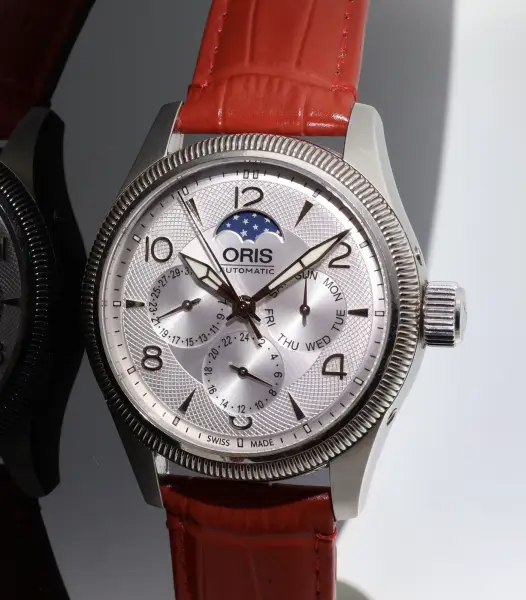
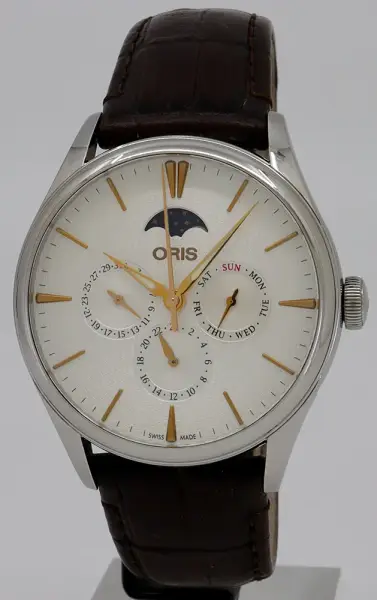
Just listed
- Oris Big Crown Complication 01 582 7678 4061 · 40mm
- Oris ProPilot X Calibre 115 0111577597153 · 44mm
- Oris Divers Sixty Five Bico 01 733 7707 4355 07 8 20 17 · 40mm
Hunting a specific Oris reference? Ask us to find it
Questions?
We read every message.
About Watch Scout
We're not a dealer - you buy direct from the dealer. One search covers every Australian dealer we track.