The history of Omega
226 watches for sale · 27 dealers · $999 to $45,000 · typically $6,500
Explore Omega's rich history, groundbreaking technical advancements, iconic watch collections, and its significant position in the contemporary luxury watch market.
The Swiss watchmaker Omega boasts a profound history, technical prowess, and a collection of timepieces that have left an indelible mark on horology and popular culture. For an Australian audience, understanding Omega's journey reveals a brand that consistently pushes boundaries while maintaining a commitment to precision and enduring style.
Foundational History
Omega's story began in 1848 when 23-year-old Louis Brandt opened a small workshop in La Chaux-de-Fonds, Switzerland. Initially, Brandt focused on crafting precise pocket watches, establishing a reputation for quality across Europe. Following his passing in 1879, his sons, Louis-Paul and César, took the helm, moving the company to Biel/Bienne in 1880 to industrialise production. A pivotal moment arrived in 1894 with the introduction of the revolutionary 19-ligne calibre, a movement celebrated for its precision and the interchangeability of its components. This innovation was so significant that the company adopted its name, becoming "Omega Watch Co.". By 1903, Omega had grown to become Switzerland's largest manufacturer of finished watches. The brand further cemented its global standing by becoming the official timekeeper of the Olympic Games in 1932, a partnership that continues to this day.
Horological Significance
Omega's commitment to technical innovation is perhaps best exemplified by its Co-Axial escapement. Invented by British master watchmaker George Daniels, Omega adopted and industrialised this groundbreaking technology in 1999 with its Calibre 2500. The Co-Axial escapement fundamentally differs from the traditional Swiss lever escapement by separating the locking function from the impulse, employing a pushing rather than a sliding friction action. This design significantly reduces friction, leading to greater mechanical efficiency, enhanced stability of precision over time, and extended service intervals for the timepiece. The Co-Axial escapement is now a cornerstone of most of Omega's mechanical watches and a key element in achieving their rigorous Master Chronometer certification.
Three Defining Collections/Models
The Speedmaster
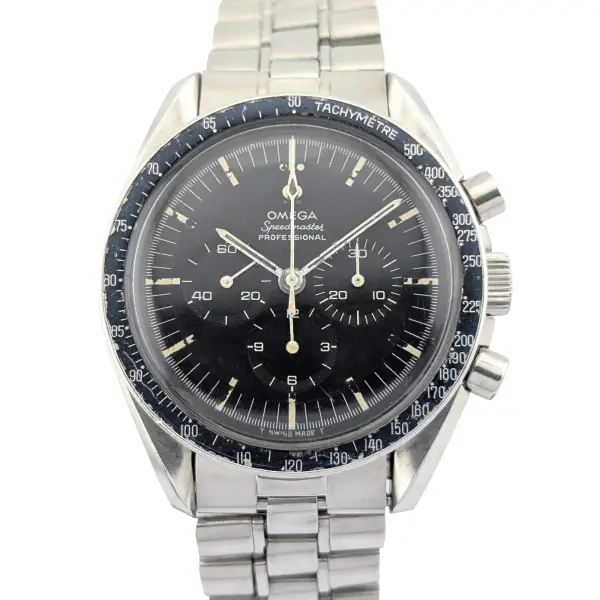
Introduced in 1957 as a chronograph for racing drivers, featuring a tachymeter scale on its bezel, the Speedmaster's destiny took a cosmic turn. In 1965, NASA qualified it for all manned space missions, and in 1969, it became the first watch worn on the moon by Buzz Aldrin, earning its iconic "Moonwatch" moniker. Collectors and buyers value the Speedmaster for its unparalleled historical significance in space exploration, its distinctive and enduring design, and the numerous special editions that celebrate its legacy.
The Seamaster
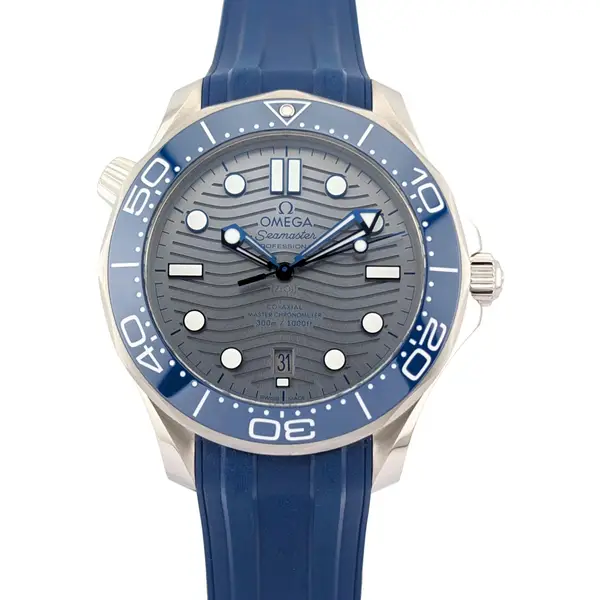
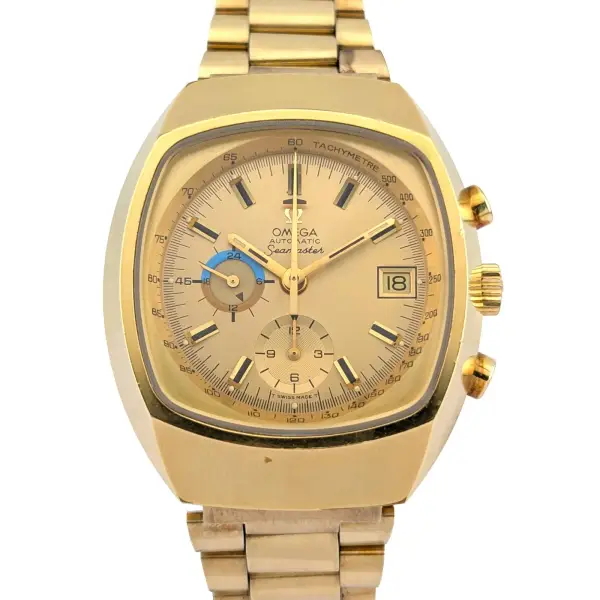
Launched in 1948 to commemorate Omega's centenary, the Seamaster drew inspiration from the robust, waterproof watches supplied to the British military during World War II. It quickly evolved from a durable dress watch into a professional dive watch with the introduction of the Seamaster 300 in 1957. The Seamaster gained immense cultural recognition through its enduring association with James Bond, appearing on the spy's wrist since 1995. Its blend of robust functionality, dive watch heritage, and pop culture appeal makes it highly desirable among collectors.
The Constellation
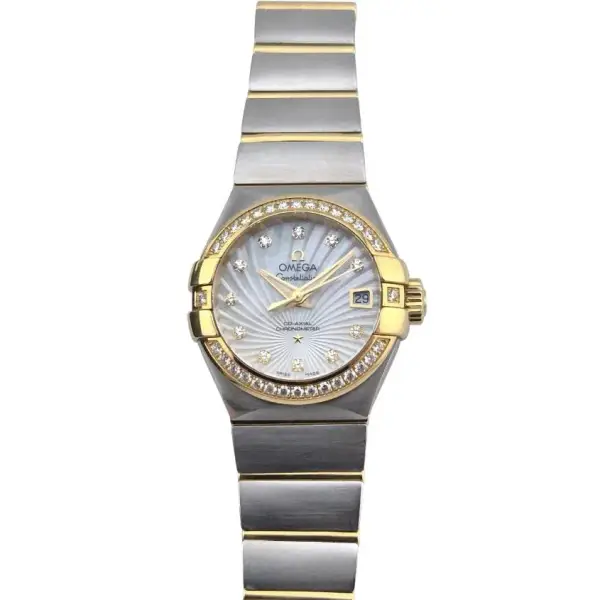
The Constellation collection, debuting in 1952, emerged from the success of Omega's chronometer-certified Centenary model of 1948. It was conceived as Omega's flagship line for precision and elegance, initially featuring chronometer-certified automatic movements. Defining design elements include the distinctive "pie-pan" dials of early models and the iconic "claws" (Griffes) introduced with the 1982 Constellation Manhattan. The Constellation appeals to collectors for its blend of chronometric performance, sophisticated design, and its unique aesthetic evolution over decades.
Current Market Positioning
Omega is firmly positioned within the entry-level to mid-tier luxury watch segment, though its Master Chronometer certified models and advanced materials often push into higher horology. In Australia, new Omega watches typically range from approximately AUD 2,000 for entry-level models to over AUD 30,000 for high-end chronometers and limited editions. Popular Seamaster models, for instance, often fall between AUD 5,000 and AUD 10,000, while a Speedmaster Professional Moonwatch can be found around AUD 12,000.
Compared to peers such as Rolex, Tudor, Cartier, and Breitling, Omega offers a compelling proposition. While Rolex often commands higher prices and longer waitlists due to scarcity, Omega provides a more accessible entry into luxury watch ownership without compromising on heritage or technical innovation. On the secondary market, Omega demonstrates strong demand and consistent sales, with some Speedmaster models showing significant value appreciation. The brand's emphasis on performance, coupled with its rich history and diverse collections, ensures its continued prominence in the global luxury watch market.
Sources and references 30
- omegawatches.com
- bobswatches.com
- feldmarwatch.com
- zealande.com
- precisionwatches.com
- monochrome-watches.com
- swatchgroup.com
- jestikcollection.com
- kapoorwatch.com
- watchdoctor.biz
- teddybaldassarre.com
- bobswatches.com
- chronohunter.com
- swisswatches-magazine.com
- sothebys.com
- jewelcover.com.au
- watchpro.com
- mostra-store.com
- mygemma.com
- crownandcaliber.com
- bobswatches.com
- bobswatches.com
- monochrome-watches.com
- dumarko.com
- vintagemasters.eu
- reddit.com
- youtube.com
- watchcraze.com.au
- dmarge.com
- accio.com
Just listed
- Omega Seamaster Diver 300M 210.30.42.20.01.018 · 42mm
- Omega Seamaster Diver 300M 2531.80.00 · 41mm
- Omega Seamaster Diver 300M 210.30.42.20.01.001 · 42mm
Hunting a specific Omega reference? Ask us to find it
Questions?
We read every message.
About Watch Scout
We're not a dealer - you buy direct from the dealer. One search covers every Australian dealer we track.