The history of Longines
38 watches for sale · 10 dealers · $1,295 to $19,999 · typically $2,495
Explore the rich history, technical innovations, and iconic collections of Longines, a revered Swiss watchmaker with a heritage spanning nearly two centuries.
Longines, a distinguished name in Swiss watchmaking, boasts a profound heritage rooted in precision, elegance, and a pioneering spirit. Established in 1832 by Auguste Agassiz in Saint-Imier, Switzerland, the company initially operated under the 'établissage' system, where independent watchmakers produced components at home. A pivotal transformation occurred when Agassiz's nephew, Ernest Francillon, took the helm. In 1867, Francillon centralised production into a single factory located in an area known locally as 'Les Longines' (The Long Meadows), thus giving the brand its enduring name. This move revolutionised manufacturing efficiency and quality control. Further solidifying its identity, Longines registered its iconic winged hourglass logo in 1889, a symbol that remains the oldest unchanged active trademark registered with the World Intellectual Property Organization (WIPO).
Horological Significance
Longines has consistently pushed the boundaries of timekeeping, contributing significantly to horological advancement. Early innovations include the Caliber 20A in 1867, which introduced a crown-winding system, eliminating the need for a separate key to wind the watch. The brand quickly established itself as a leader in chronograph development, producing its first chronograph movement, the 20H, in 1878. This 'mono-pusher' chronograph was instrumental in sports timing, particularly in equestrian events. Longines' commitment to precision timing extended to aviation, where it developed essential navigation instruments such as the Weems Second-Setting Watch and the Lindbergh Hour Angle Watch, aiding pioneering aviators in calculating longitude during flight. In more recent times, Longines has showcased its technical prowess with the 'Very High Precision' (VHP) quartz movements, offering exceptional accuracy of +/- 5 seconds per year and featuring a 'Gear Position Detection' (GPD) system to reset hands after impact or magnetic interference. While part of the Swatch Group, Longines often utilises modified ETA-based movements, many of which are exclusive to the brand, ensuring reliability and performance.
Defining Collections
Longines' diverse portfolio includes several collections that resonate deeply with collectors and buyers:
The Heritage Collection
This collection is a heartfelt homage to Longines' storied past, reissuing iconic designs that capture the essence of different eras. Models like the 'Legend Diver' and the 'Avigation BigEye' are celebrated for their faithful adherence to historical aesthetics while incorporating modern watchmaking techniques. Collectors are drawn to the Heritage line for its authentic vintage appeal and the tangible connection it offers to significant moments in horological history.
The Master Collection
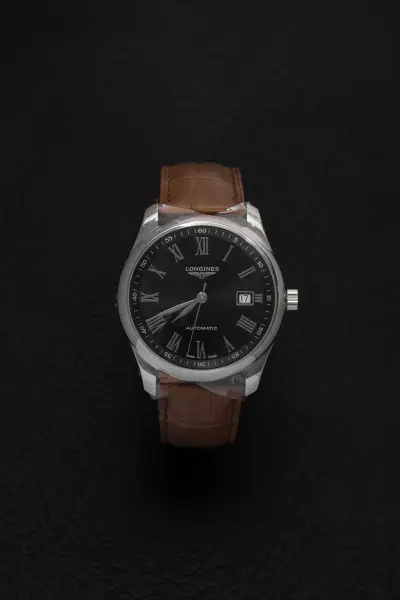
Embodying classic elegance and traditional watchmaking, the Master Collection features self-winding mechanical movements, often visible through transparent casebacks. These timepieces are characterised by their refined aesthetics, including blued 'leaf' hands, Roman or elegant Arabic numerals, and sometimes a 'barleycorn' textured dial. The Master Collection appeals to those who appreciate sophisticated complications and the enduring charm of classical Swiss horology.
The HydroConquest Collection
Designed for aquatic adventures, the HydroConquest collection represents Longines' robust sports watch offering. These dive watches combine contemporary design with essential features for underwater use, such as high water resistance, unidirectional rotating bezels, and luminous displays. The HydroConquest is popular among buyers seeking a durable, high-performance sports watch that doesn't compromise on style.
Current Market Positioning
Longines occupies a strong position within the 'entry-level luxury' or 'affordable luxury' segment of the watch market. It is widely regarded for offering exceptional value, combining rich heritage and quality Swiss craftsmanship at a more accessible price point compared to higher-tier luxury brands like Rolex, Omega, or Breitling. In the Australian market, Longines watches typically range from approximately AUD $2,000 for some entry-level models to over AUD $6,000 for more complex or precious metal pieces, with specific models like the 'PrimaLuna' starting around AUD $2,175 and the 'Ultra-Chron' reaching up to AUD $6,000. This positioning places Longines as a compelling choice for discerning buyers looking for a reputable Swiss watch with a significant legacy without venturing into the five-figure price bracket, often competing with brands such as TAG Heuer and Oris.
Sources and references 18
Longines for sale
Every Longines we track at Australia's independent dealers.
Just listed
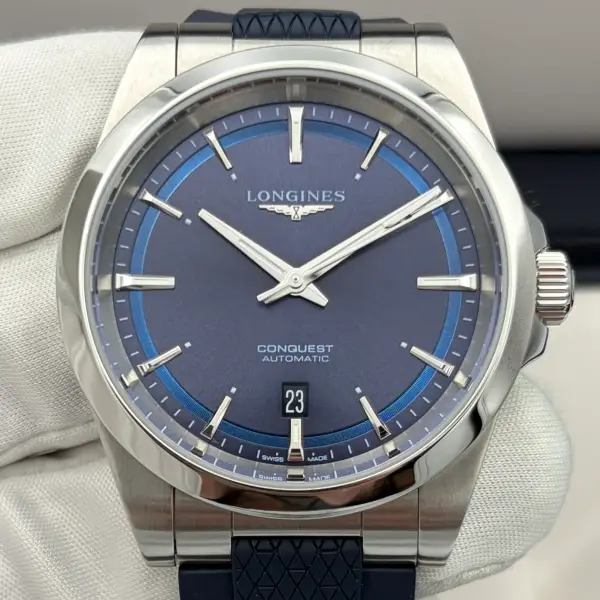
- Longines Conquest L3.830.4.92.9 · 41mm
- Longines DolceVita L5.757.4.71.9 · 27mm
- Longines Record Automatic L23204562
Hunting a specific Longines reference? Ask us to find it
Questions?
We read every message.
About Watch Scout
We're not a dealer - you buy direct from the dealer. One search covers every Australian dealer we track.