The history of Hublot
35 watches for sale · 17 dealers · $2,000 to $129,000 · typically $16,995
Explore Hublot's journey from its pioneering rubber strap to its 'Art of Fusion' philosophy, innovative materials, and iconic collections.
Hublot, a brand synonymous with audacious design and material innovation, has carved a distinctive niche in the luxury watch landscape. Founded in 1980 by Italian entrepreneur Carlo Crocco in Geneva, Switzerland, the brand's initial vision was to create a watch that seamlessly blended traditional craftsmanship with contemporary materials.
Foundational History
Carlo Crocco, hailing from a family of watchmakers, established MDM Genève in 1976 before launching the Hublot brand at the 1980 Basel Watch Fair. His inaugural creation was revolutionary: an 18-carat gold watch paired with a natural rubber strap. This unprecedented combination of precious metal and a casual material was initially met with scepticism but quickly gained traction, becoming a signature element of the brand's identity.
A pivotal moment arrived in 2004 with the appointment of industry veteran Jean-Claude Biver as CEO. Biver revitalised Hublot, cementing its 'Art of Fusion' philosophy – a concept that embraces the unexpected combination of materials and ideas. The following year, in 2005, Hublot unveiled the Big Bang collection, a design that catapulted the brand to global prominence and earned it the prestigious Best Design award at the Grand Prix d'Horlogerie de Genève. In 2008, the brand was acquired by the luxury conglomerate LVMH, further solidifying its position in the high-end market.
Horological Significance
Hublot's technical prowess is deeply rooted in its 'Art of Fusion' philosophy, particularly through its relentless pursuit of material innovation and the development of sophisticated in-house movements. Beyond pioneering the use of natural rubber straps with precious metals, Hublot has introduced groundbreaking materials such as 'Magic Gold', the world's first scratch-resistant 18K gold alloy, created by fusing 24K gold with ceramic. They have also mastered the creation of vibrant coloured ceramics and are leaders in producing sapphire cases in various hues, including the patented SAXEM, a sapphire aluminium oxide tougher than traditional sapphire.
In terms of movements, Hublot's 'Unico' calibre, first introduced in 2010, is a significant in-house flyback chronograph movement developed specifically for the Big Bang collection. This calibre showcases advanced engineering, including a clutch wheel with sprung teeth designed for smooth torque delivery. The brand's 'Manufacture Piece' (MP) collection further demonstrates its horological ambition, featuring movements with extreme power reserves, such as the MP-05 LaFerrari with its remarkable 50-day power reserve achieved through eleven barrels, and unconventional time displays.
Three Defining Collections/Models
Big Bang
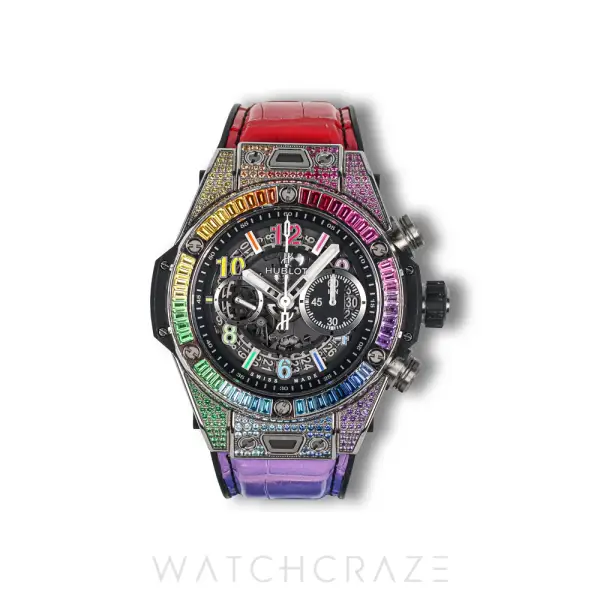
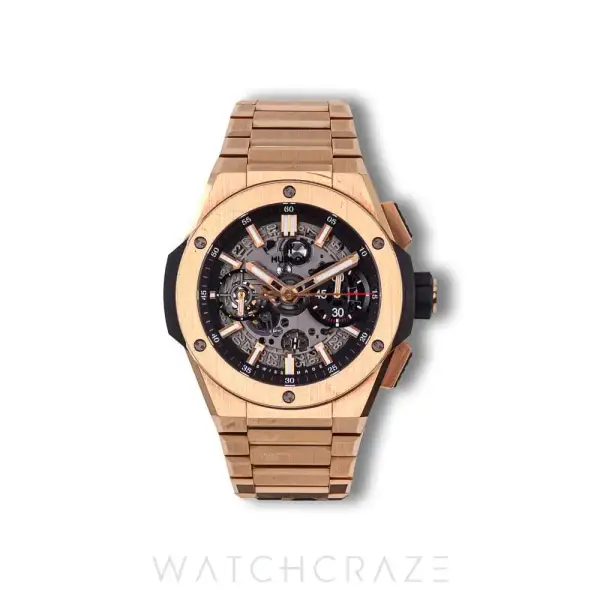
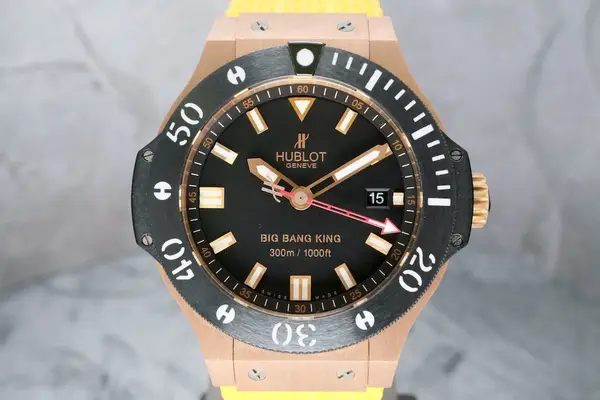
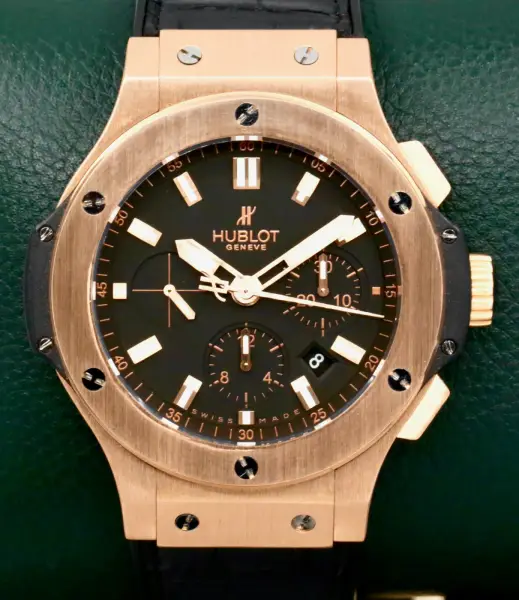
Launched in 2005, the Big Bang is arguably Hublot's most iconic collection. It embodies the 'Art of Fusion' with its distinctive, multi-layered case construction and bold combinations of materials like carbon, ceramic, gold, and rubber. Its disruptive design and technical innovation make it highly sought after by collectors and buyers who appreciate its modern, avant-garde aesthetic.
Classic Fusion
The Classic Fusion collection pays homage to Carlo Crocco's original 1980 design, offering a more refined and understated aesthetic compared to the Big Bang. Characterised by its thinner profile and cleaner dial, it maintains the iconic porthole-inspired bezel with 'H' screws. This collection appeals to those seeking elegance and versatility, serving as a sophisticated option for both formal and casual wear, and often representing an entry point into the Hublot brand.
MP (Masterpiece) Collection
Introduced in 2011, the MP collection is Hublot's platform for grand complications and experimental watchmaking. These timepieces push the boundaries of traditional horology with features like extreme power reserves, multi-axis tourbillons, and highly unconventional displays, such as roller-based time indications. The MP collection is significant for collectors who value audacious technical prowess and artistic expression in high horology.
Current Market Positioning
Hublot occupies a distinctive position within the luxury watch market. While some Classic Fusion models, particularly those with Sellita-based movements, can be considered entry-level luxury, the brand's Big Bang and MP collections firmly place it in the realm of high horology. Hublot is known for catering to a 'new luxury' audience, appealing to younger, fashion-forward demographics through bold designs and strategic partnerships in sports and entertainment.
In Australia, Hublot watches are regarded as a luxury item, appreciated for their innovative designs and high-quality materials. Typical price ranges for Hublot in Australia can start from approximately AUD 12,000-15,000 for entry-level Classic Fusion models. Big Bang models can range from tens of thousands to well over AUD 100,000, especially for those featuring in-house movements, precious metals, or advanced sapphire cases. The highly exclusive MP collection often commands prices in the hundreds of thousands.
Compared to peers such as Rolex, Omega, Cartier, and Breitling, Hublot distinguishes itself through its 'Art of Fusion' philosophy and often polarising, avant-garde designs. While some traditional brands are known for strong secondary market value retention, Hublot, like many luxury brands outside of a select few, typically sees its models trade below retail on the pre-owned market. However, its commitment to innovation and unique material development ensures its standing as a forward-thinking force in mechanical watchmaking.
Sources and references 36
- revolutionwatch.com
- portomontenegro.com
- italianwatchspotter.com
- en.wikipedia.org
- mygemma.com
- chrono24.co.uk
- watchswiss.com
- revolutionwatch.com
- ethoswatches.com
- swisswatches-magazine.com
- thehourglass.com
- the1916company.com
- timeavenue.com
- swissparadise.in
- watchmaxx.com
- bankslyon.co.uk
- bachmann-scher.de
- hublot.com
- global-citizen.com
- hautehorologe.ae
- hublot.com
- luxurybazaar.com
- watchadvice.com.au
- thehourglass.com
- swisswatches-magazine.com
- thehourglass.com
- watchmaxx.com
- watchesbysjx.com
- timeandtidewatches.com
- watchcraze.com.au
- mbaskool.com
- theadultman.com
- mbaskool.com
- owler.com
- luxurybazaar.com
- chrono24.com
Just listed
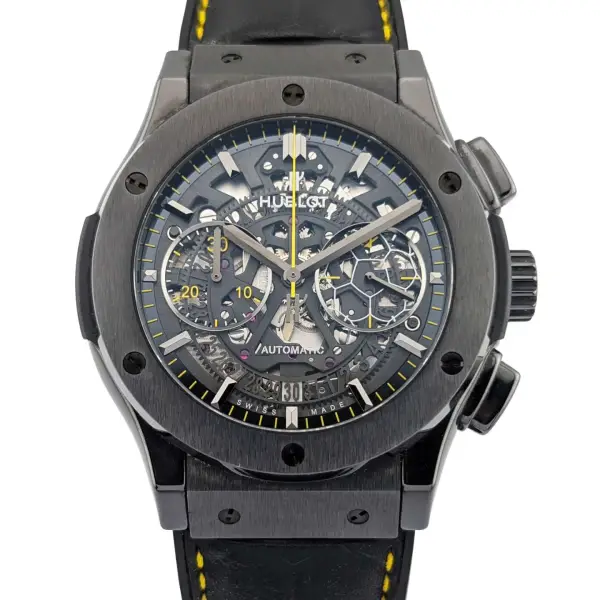
- Hublot Classic Fusion Chronograph 521.NX.1171.RX · 45mm
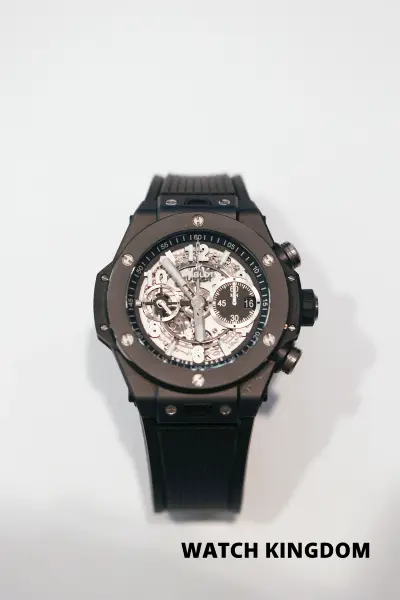
- Hublot Big Bang All Black King 322.CM.1110.RX · 48mm
- Hublot Classic Fusion 511.NX.1170.NX · 45mm
Hunting a specific Hublot reference? Ask us to find it
Questions?
We read every message.
About Watch Scout
We're not a dealer - you buy direct from the dealer. One search covers every Australian dealer we track.