The history of Grand Seiko
26 watches for sale · 7 dealers · $3,250 to $13,980 · typically $8,098
Explore Grand Seiko's rich history, unique technical innovations, iconic collections, and its distinctive position in the global luxury watch market.
Grand Seiko, a marque synonymous with precision, legibility, durability, and beauty, emerged from Japan in 1960. Its origins trace back to Kintaro Hattori, who founded K. Hattori & Co. (later Seiko) in Tokyo in 1881, establishing the Seikosha factory in 1892. The ambitious project of creating the 'ideal watch' was entrusted to Seiko's Suwa Seikosha factory in the Nagano Prefecture. The inaugural Grand Seiko, powered by the Caliber 3180, was a pivotal moment, becoming the first Japanese watch to meet the stringent chronometer standards of the time.
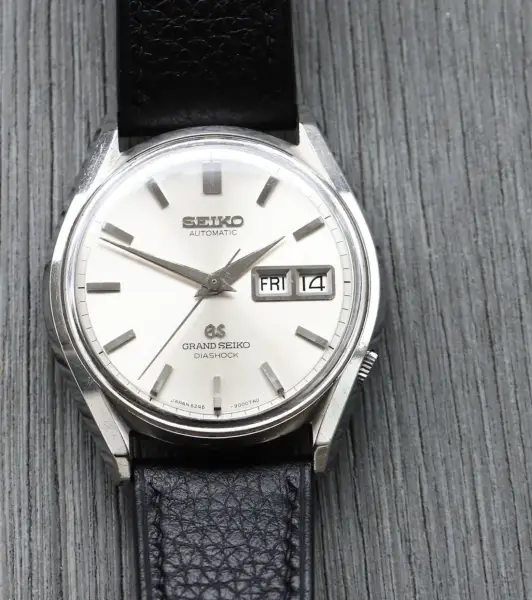
Further milestones include the 1967 introduction of the 44GS, which codified the brand's distinctive 'Grand Seiko Style' or 'Grammar of Design', emphasising sharp lines and distortion-free surfaces. The late 1960s saw the advent of the first Hi-Beat automatic movements, such as the 61GS in 1968. While the 'quartz crisis' of the 1970s led to a temporary hiatus for mechanical Grand Seiko, the brand re-emerged with high-end quartz models like the 95GS in 1988, followed by the mechanical 9S series in 1998. A significant development arrived in 2004 with the revolutionary Spring Drive technology. In 2017, Grand Seiko officially separated from its parent company, Seiko, establishing itself as an independent luxury brand.
Horological Significance
Grand Seiko's technical prowess is defined by three core movement technologies and a unique finishing technique.
Spring Drive
This innovative hybrid movement is a hallmark of Grand Seiko. It is powered by a traditional mainspring, yet its accuracy is regulated by a 'Tri-Synchro Regulator' that incorporates a quartz oscillator and an integrated circuit. This fusion delivers exceptional precision, typically within ±1 second per day or ±15 seconds per month, and is visually characterised by a perfectly smooth, gliding seconds hand, unlike the ticking of mechanical or stepping of quartz movements.
Hi-Beat Mechanical
Grand Seiko's Hi-Beat movements operate at a high frequency of 36,000 vibrations per hour (10 beats per second). This elevated beat rate enhances accuracy and provides a visibly smoother sweep of the seconds hand. To achieve this, Grand Seiko utilises proprietary Spron alloys for mainsprings and employs advanced MEMS (Micro Electro Mechanical Systems) technology to create lighter, more efficient components, ensuring both precision and durability.
Zaratsu Polishing
Central to the Grand Seiko aesthetic is 'Zaratsu' polishing, a highly skilled, distortion-free mirror-polishing technique applied by hand. This meticulous process, originally inspired by Swiss Sallaz machines, creates incredibly sharp edges and brilliant, flat surfaces on the watch cases, contributing significantly to the brand's distinctive 'sparkle of quality' and play of light and shadow.
Three Defining Collections/Models
Grand Seiko's collections are celebrated for their distinctive character and craftsmanship.
Heritage Collection (e.g., SBGA211 'Snowflake')
The Heritage Collection embodies the classic Grand Seiko aesthetic, often featuring dials inspired by the natural beauty of Japan. The SBGA211, affectionately known as the 'Snowflake', is an iconic Spring Drive model renowned for its textured dial, meticulously crafted to evoke the pristine snowscapes of the Shinshu region. Its unique beauty and technical excellence make it a highly sought-after piece among collectors.
Elegance Collection (e.g., SBGM221)
The Elegance Collection offers refined and classic dress watches, frequently incorporating practical complications such as GMT functions. The SBGM221 is a popular example, celebrated for its timeless design, elegant proportions, and the utility of its GMT complication, appealing to those who appreciate sophisticated timepieces for travel or formal occasions.
Sport Collection (e.g., SBGE257)
The Sport Collection showcases Grand Seiko's robust and functional side, featuring models like divers and GMTs, often powered by Spring Drive movements. These watches combine Grand Seiko's signature precision and exquisite finishing with enhanced durability and water resistance, making them ideal for active lifestyles while retaining the brand's distinctive aesthetic. The SBGE257 Spring Drive GMT is a strong representative, offering both utility and refined design.
Current Market Positioning
Grand Seiko is firmly positioned within the high-end luxury watch segment, often drawing comparisons with established Swiss brands such as Rolex and Omega. The brand is celebrated for its 'quiet luxury' approach, prioritising exceptional craftsmanship, innovative technical precision, and subtle, nature-inspired aesthetics over overt branding. All Grand Seiko calibres are designed, developed, and manufactured entirely in-house, a testament to its vertical integration.
In the Australian market, Grand Seiko's typical price range for mechanical and Spring Drive models generally spans from approximately AUD 6,000 to AUD 15,000, with some exquisite Masterpiece models reaching significantly higher price points. While Rolex often commands higher resale values and global brand recognition, Grand Seiko is increasingly recognised by connoisseurs for offering comparable or superior finishing and movement technology, particularly its Spring Drive, often at a more accessible price point on the secondary market. The brand's international sales continue to grow, solidifying its reputation as a formidable player in luxury horology.
Sources and references 29
- grandseikogs9club.com
- seikowatches.com
- mostra-store.com
- dalucastraps.com
- bobswatches.com
- chrono24.com
- deacons-jewellers.com
- ethoswatches.com
- timeandtidewatches.com
- bobswatches.com
- grand-seiko.com
- bhindi.com
- youtube.com
- bobswatches.com
- wornandwound.com
- timeandtidewatches.com
- grand-seiko.com
- strapcode.com
- realmenrealstyle.com
- cortinawatch.com
- jfarrenprice.com.au
- jfarrenprice.com.au
- youtube.com
- grand-seiko.com
- teddybaldassarre.com
- chrono24.com.au
- grand-seiko.com
- zealande.com
- twobrokewatchsnobs.com
Grand Seiko for sale
Every Grand Seiko we track at Australia's independent dealers.
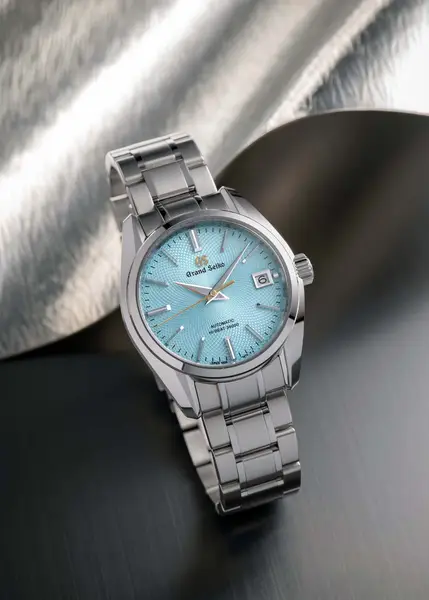
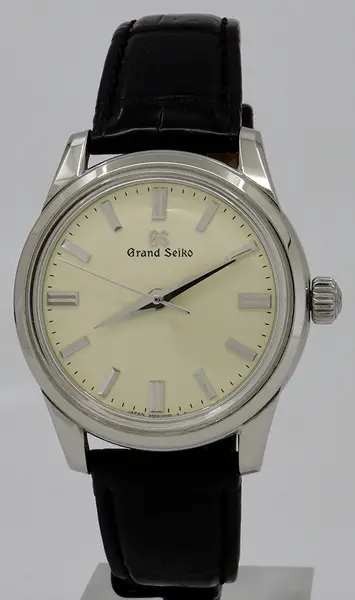
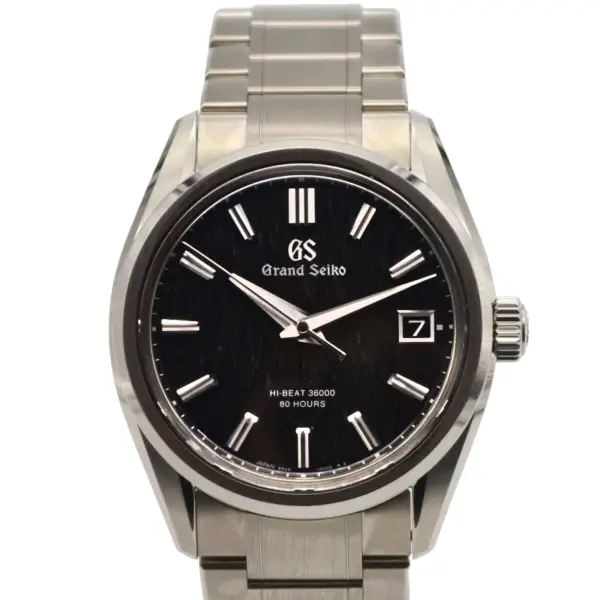
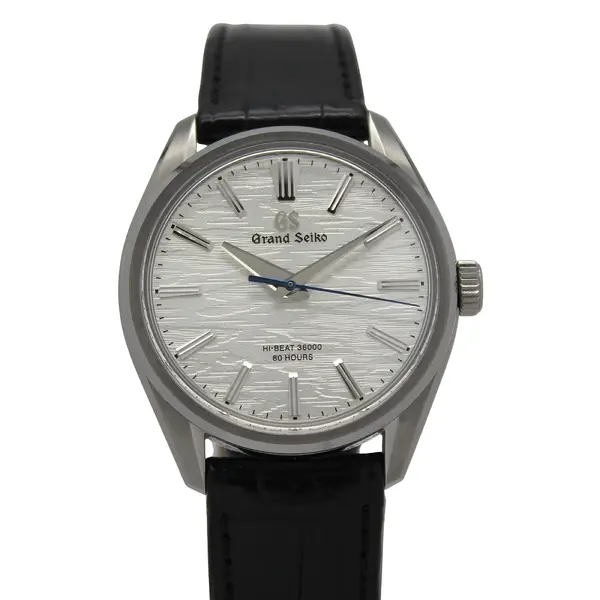
Just listed
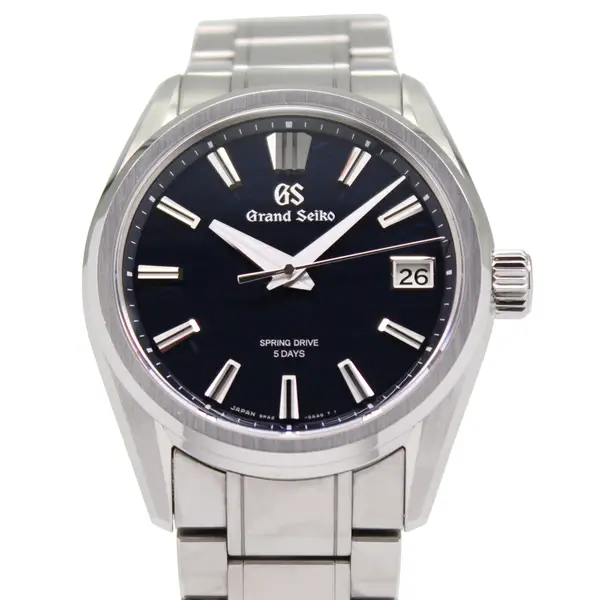
- Grand Seiko Heritage Collection SBGR087 SBGR087 · 37mm
- Grand Seiko Heritage GMT Mt.Iwate SBGJ201 · 40mm
- Grand Seiko Heritage Shunbun Cherry Blossom SBGA443 · 40mm
Hunting a specific Grand Seiko reference? Ask us to find it
Questions?
We read every message.
About Watch Scout
We're not a dealer - you buy direct from the dealer. One search covers every Australian dealer we track.